I passed the first “final” test by 0,5 point at the end of the 7th week. I was happy, because I didn’t know, but if I had failed, I probably couldn’t have gone to Africa next year.
Meanwhile, I was in Castel
my company started a 3 months long preparation period in a training camp in the east of France. It was hard to admit, but I was in a holiday in 4°RE compared to my comrades doing “parcours bulldog” in the mud and drilling all day (sometimes even all night) in “La Courtine”. I found the radio training physically and technically difficult, but I was still in a better situation than some of my mates were back in the reg.
As I passed the test, I could relax a bit and became more confident.
I didn’t give my new tactic up with the French language (you’ll find a short description about how I increased my French knowledge in a short time). So, I could finally make more attention on the technical part of the training. By the time, I got better in radio procedure, installing VHF/HF networks and I started to get used to the equipment.
I can’t say that it was the better thing I did during my years in the Legion and I wouldn’t recommend to everyone, but I liked and still like my specialty.
If I should choose now, probably I would change to become a medic.
I don’t know if the exact term is combat medic or paramedic, so I’ll just call it medic. In French it’s AUX-SAN for “Auxiliaire-Sanitaire”. They also have to pass several months in Castel and the training is very difficult for new legionnaires, but it worth it because they learn cool and useful things.
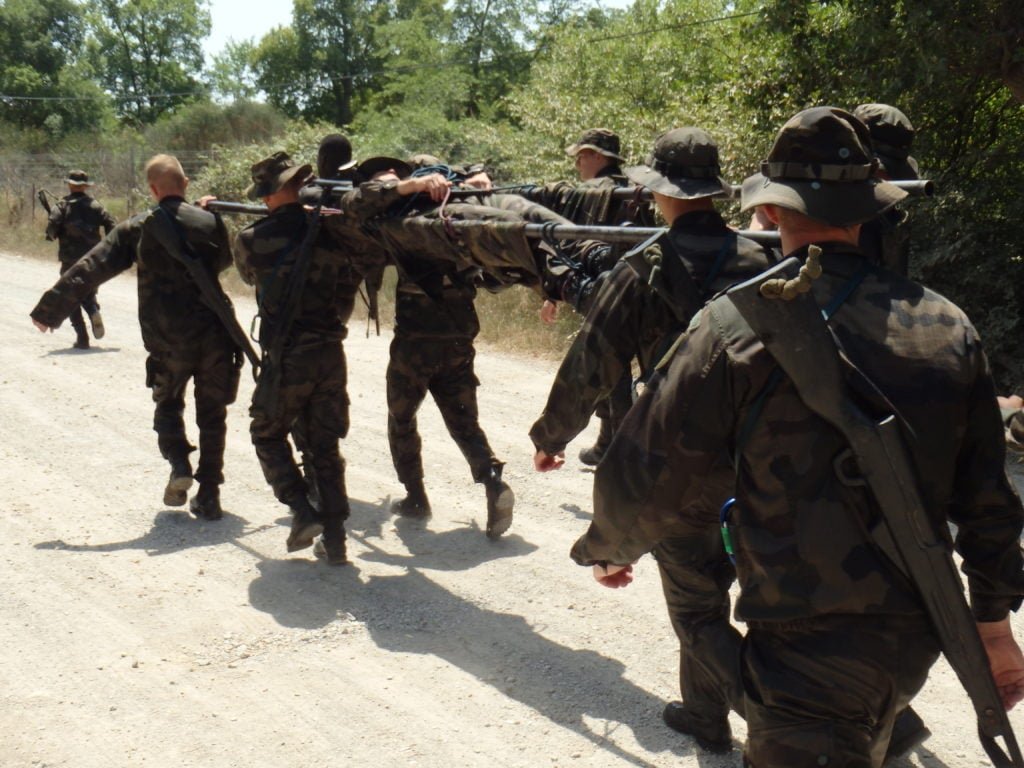
During the 4 months, the trainees also go up to Paris to work with the firefighters (in France the firefighters responds to accident cases like a heart attack or a broken leg). The less interesting part of this specialty is when you are a medic in a platoon, because you’ll also have to treat things like water-blister or small injuries which aren’t very interesting.
For those who want to stay for a long time in the French Foreign Legion
the army offers the possibility to follow a military medic course for NCOs, which lasts 2 years and the largest part is in a civil nursing school in Lyon. The diploma is also valid in civilian life and the military experience could interest some enterprises operating in war zones like Mali or East-Ukraine.
If you don’t think that the nursing part is for you, being a first aid specialist could still be a great opportunity. It’s a level under the medic’s, because in this specialty you’ll concentrate much more on:
- Preserve life
- Protect the casualty from further harm
- Provide pain relief
Basic levels in combat rescue and civic prevention are mandatory for everyone, but if you want to go further – and have a great level in French – you can end up as an instructor. I followed these courses until I became a rescue team member, but I didn’t have enough time for more.
Legion Training
Prepare for selection.
Get ready for the French Foreign Legion with practical training tools.


Unfortunately, the radio training isn’t one of the most useful trainings, but as I said I don’t mind being a radioman also called as Transmetteur in French.
If someone would like to read a bit more about medic trainings, visit this site. I know a former legionnaire who finished a 6 months long training here and makes pretty good money nowadays as a paramedic.


Leave a Reply