Reviewed October 2026
When I joined the French Foreign Legion in 2012, I was 18 years old. I’d watched plenty of videos, read what I could find about recruitment and thought I was reasonably well prepared.
I wasn’t.
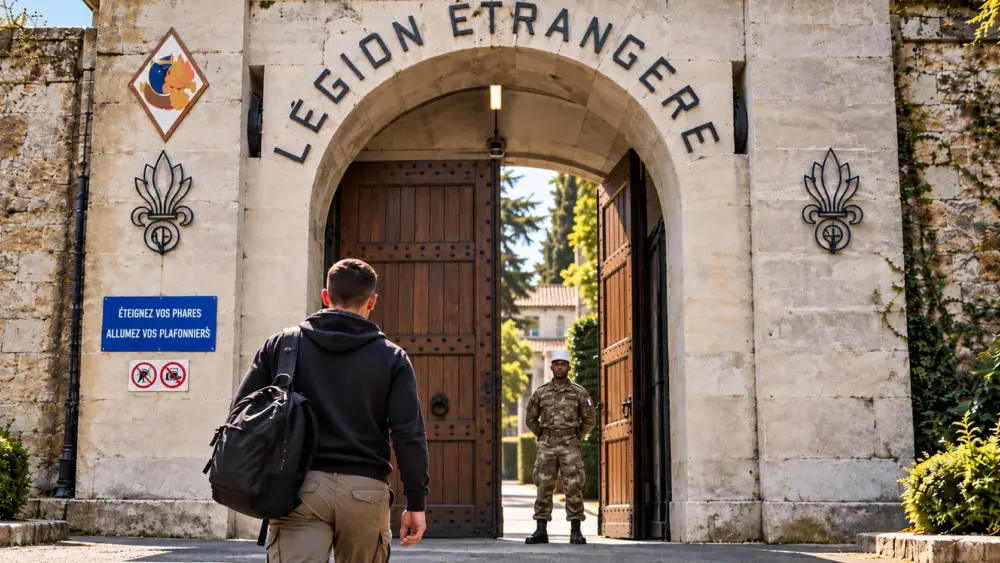
I got lost in Paris trying to find Fort de Nogent. My French was extremely limited. And when I reached Aubagne, I discovered that some of the tests were quite different from what I’d expected.
Experience
I almost failed the Cooper running test because I’d mainly trained on a treadmill. At home, I could see my pace on a screen. During selection, I had no watch, no screen and no idea whether I was running fast enough. I passed, but only just.
The Cooper was part of selection in 2012. Candidates now take the Luc Léger beep test. I hadn’t practised the test properly, and it nearly cost me my place.
Here’s what I’d prepare before travelling to France, based on my own selection and eight years in the Legion.
1. Understand what happens during selection
Official Information
Selection has three main phases: evaluation, selection and incorporation. You’ll undergo physical tests, medical examinations, logic and personality tests, and interviews. Candidates who make it through the process appear before a selection board. The Legion’s recruitment website explains the stages.
Selection can take two to three weeks, but you may be sent home much sooner.
Experience
Passing individual tests doesn’t guarantee you’ll become a legionnaire. Recruiters also observe how you behave and work with other candidates. Being strong won’t help much if you can’t follow instructions.
To see what arriving at a recruitment centre is like, watch Le major Gérald s’engage !. Major Gérald plays the role of a candidate more than 30 years after joining himself. It’s a 2021 reconstruction, but it gives a useful idea of the environment.
I’ve covered the whole process, from the recruitment centre to incorporation, in my guide to joining the French Foreign Legion. Here, we’ll concentrate on preparation.
2. Prepare your journey to France
The Legion recruits throughout the year, but you can’t enlist remotely. You need to travel to a recruitment centre in France. Your flight, visa if you need one, and journey are your responsibility.
Check your documents. Make sure you have the correct identity document for your nationality, can legally enter France and have any medical reports you may need.
Plan for a possible rejection. You might be sent home after a few days. Have enough money for your journey back and somewhere to stay afterwards.
Don’t leave too early. If you can barely do a pull-up or struggle to run for a few minutes, keep training before buying a ticket.
Experience
I remember a Russian candidate at Fort de Nogent in 2012. He arrived in a nice suit, carrying a briefcase, looking more like someone attending a business meeting. He’d travelled for about twelve hours.
He couldn’t complete the pull-ups he was asked to do. A caporal-chef accompanied him back to the gate, and his attempt was over. Maybe the long journey had exhausted him. I don’t know. But he’d travelled all that way without being ready for the first physical check.
You can read more about my arrival in the first chapter of my joining story.
3. Physical preparation: train for the actual tests
Official Information
Selection currently includes overhand pull-ups and the Luc Léger beep test. The Legion also strongly recommends being able to swim at least 25 metres unaided. For the full rules and standards, see my Fitness Requirements guide.
Pull-ups: clean repetitions count
For the test, you start with your arms extended, use an overhand grip and return to the starting position between repetitions. I’d aim for at least eight clean pull-ups before travelling. That’s my preparation target, not the official minimum. Training with half pull-ups or swinging yourself over the bar won’t prepare you for that.
If you can’t do one yet, start with assisted repetitions, controlled lowering exercises and basic pulling strength. If you can already do several, increase your repetitions while keeping the same technique.
You don’t need to attempt a maximum set every day. Increase your training gradually and leave enough recovery time between demanding sessions.
Major Gérald has also made a useful video on improving pull-ups. Below is the Legion’s own demonstration of the movement expected during recruitment.
Luc Léger: practise the beeps and the turns
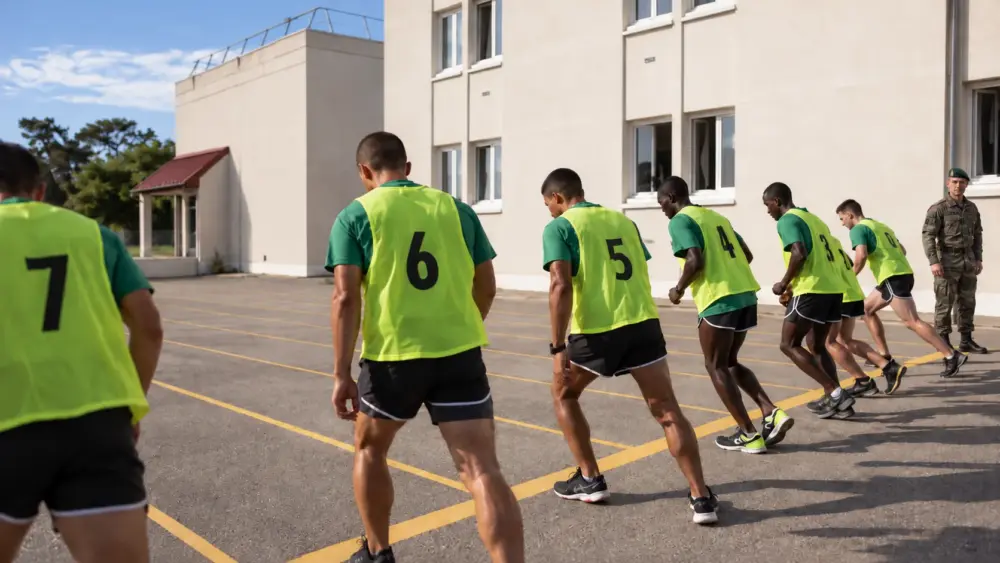
The Luc Léger is a shuttle run between two lines 20 metres apart. You have to reach each line in time with the beep, and the pace gradually increases.
The published minimum is level 5. My preparation target is level 8 or 9. It’s advice, not an official requirement.
Experience
When I tried the Luc Léger again in 2020, I found it harder than it looked. In the original version of this article, I suggested practising it several times during the same session. There’s a good reason to practise the test itself: you learn the rhythm, the turns and how not to waste energy. But a beginner doesn’t need to run several all-out tests in one workout.
I’d include three types of running in your preparation:
- Comfortable running. Build the endurance to run continuously without exhausting yourself every time.
- Interval training. Alternate faster efforts with easier recovery. Increase the workload gradually, according to your current fitness.
- Luc Léger practice. Measure exactly 20 metres, put a marker at each end and use a proper beep-test audio recording. Train your timing as well as your speed.
For example, during an easier session, run only the early levels and concentrate on reaching the line with the beep. Don’t sprint to the marker and wait there. As the pace increases, work on turning efficiently without adding unnecessary steps. On a different training day, you can complete the full test to check your progress.
Major Gérald demonstrates interval running with legionnaires of the 1er REC. That session was designed for a different military running assessment, but the training principles are useful here too.
Practise with a suitable Luc Léger audio track on a properly measured 20-metre course. Make sure the timing matches the test you are preparing for.
Swimming and general fitness
If you can’t swim 25 metres unaided, learn before you travel. Take lessons if you need them. Being comfortable in the water is useful well beyond selection.
Experience
From my experience, not being a swimmer wasn’t necessarily an automatic reason for elimination. But if recruiters have two otherwise similar candidates and one can swim while the other can’t, I believe the swimmer has an advantage. I wouldn’t arrive with that weakness if I had time to work on it.
During basic training you’ll also march, spend long days on your feet and repeat exercises while tired. Don’t prepare only for two tests.
4. Prepare for the psychotechnical tests and interviews
Logic tests: get used to solving problems under time pressure
Official Information
You’ll take logic tests and a separate personality test. The logic tests don’t require specialised school knowledge, but it’s worth practising the sort of reasoning involved. The Legion has sample exercises on its recruitment website.
Practise number sequences, patterns and logical relationships. Give yourself a time limit. If one problem takes too long, learn to move on.
You’ll find a fuller explanation in my French Foreign Legion IQ Test guide. A few examples won’t replace regular practice. Try different types of problems and learn to work within a time limit.
Interviews: know why you’re joining
Experience
During my selection in Aubagne, I was asked why I wanted to join, what I expected from the Legion and how I imagined my military career.
Think about that before you go. Why the Legion? Why do you want to become a soldier? What do you know about the five-year contract, discipline and time away from home? What would you do if you didn’t get the regiment you wanted?
There’s no need to memorise impressive answers from YouTube or Reddit. Recruiters have heard them before. Be clear about your own reasons.
Some candidates have already served in an army, while others have never worn a uniform. Whatever your background, explain your past and your reasons for joining honestly. The Legion will check your background, and inventing a story about yourself isn’t a good start.
5. Mental preparation: the Legion is not an individual sport
At a recruitment centre, you’ll meet candidates who speak different languages, have different habits and come from places you may never have heard of. You’ll share accommodation, routines and everyday tasks with people you barely know.
At the recruitment centre, you’re already expected to live with others, share basic duties and follow a daily routine. That continues during training at the 4th Foreign Regiment in Castelnaudary.
There are a few habits worth getting used to:
- Arrive early. We used to say in the Legion: Être à l’heure, c’est déjà être en retard. Being on time is already being late. If you’re expected somewhere at 07:00, be ready by 06:50.
- Listen before acting. If you didn’t understand an instruction or aren’t sure what to do, watch the French-speaking candidates and follow their lead.
- Cooperate. You won’t get to choose every person you live or work with.
- Own your mistakes. Blaming somebody else won’t make a problem disappear.
The Legion is often described as a second chance. But that also means accepting obligations towards your commanders, your comrades and the institution. If you’re interested in the mental side of preparation, there’s a short ebook about mental training in Legion Training.
You’re volunteering to become a soldier, with responsibilities towards the people around you.
6. Learn some French, check your health and pack sensibly
A little French helps
Experience
When I arrived at Fort de Nogent, the only French sentence I knew was Je veux m’engager à la Légion étrangère — I want to join the French Foreign Legion. I couldn’t even say bonjour.
That was enough to explain why I was standing at the gate, but knowing a little more would have helped.
Learn the numbers and some simple words, especially directions and common instructions.
You don’t need fluent French to join. But being able to understand a few words is already useful.
Medical preparation
Bring reports about previous operations or important medical conditions. If you wear glasses, bring them. I’d also have my teeth checked before travelling. The published BMI range is 18–30, but the military doctor decides whether you’re fit for service. I’ve explained the tests in my Medical Tests guide.
What to bring
Official Information
The Legion’s packing list includes sports shoes, toiletries, three changes of underwear, T-shirts and socks. It specifies a maximum of €70 in cash at the recruitment centre. Weapons, including knives, are prohibited.
Keep it simple. There’s no reason to buy tactical equipment or expensive military clothing. And don’t confuse the €70 cash limit at the centre with the money you’ll need for your journey to France and potentially back home.
7. My final advice before you go
If I could prepare again, I’d spend less time watching videos and more time training for the tests. I’d also learn a little French and sort out my journey before leaving home.
I nearly failed the Cooper test in 2012, despite being determined to join. I’d trained, but not well enough for that particular exercise.
Be realistic about your weak points, give yourself enough time to improve and arrive ready to do the tests properly.


Leave a Reply