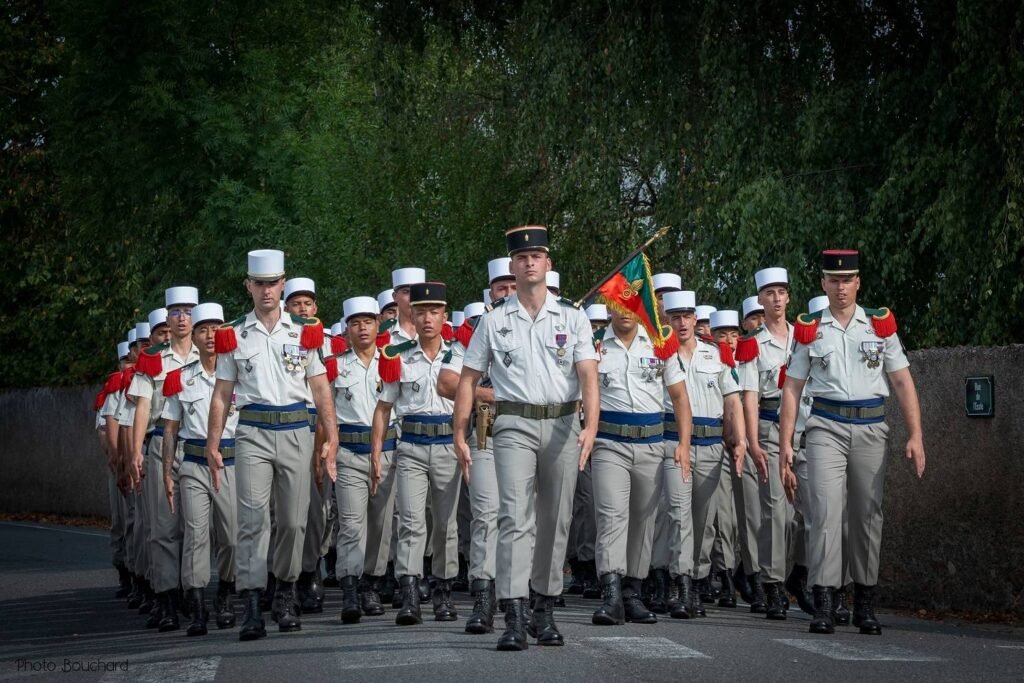
“Success belongs to those who apply themselves.”
The 4th Foreign Regiment (4e RE) in Castelnaudary is the Legion’s main training regiment. New recruits start there, and many legionnaires return for leadership, driving or specialist courses.
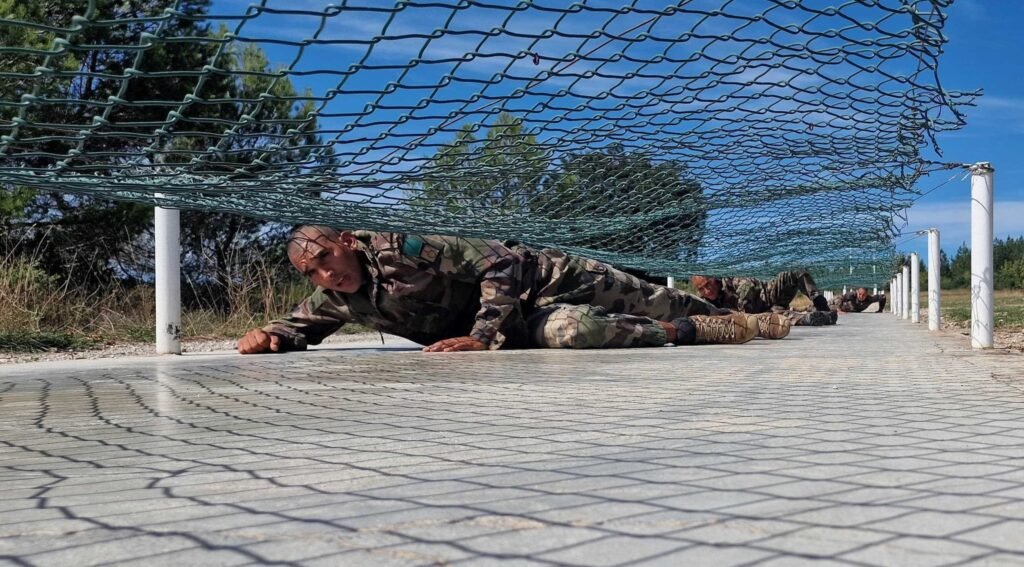
Training continues throughout a legionnaire’s career. After initial training, soldiers can qualify in a specialty. Those selected for promotion receive additional leadership training, including the Formation générale élémentaire (FGE) for future corporals and higher-level courses for non-commissioned officers (NCOs).
Initial training at the 4e RE
After passing selection in Aubagne, a recruit spends around four months at the 4e RE before joining an operational regiment. Training combines field exercises, fitness, discipline and basic military skills. The Marche Képi Blanc, when recruits earn their white képi, is an important milestone. The official recruitment website outlines the selection and training sequence.
This first step is not only about combat training. It also teaches discipline, teamwork, and adaptation to life in France. The goal is to build resilience and unity among recruits.
Specialist and technical training
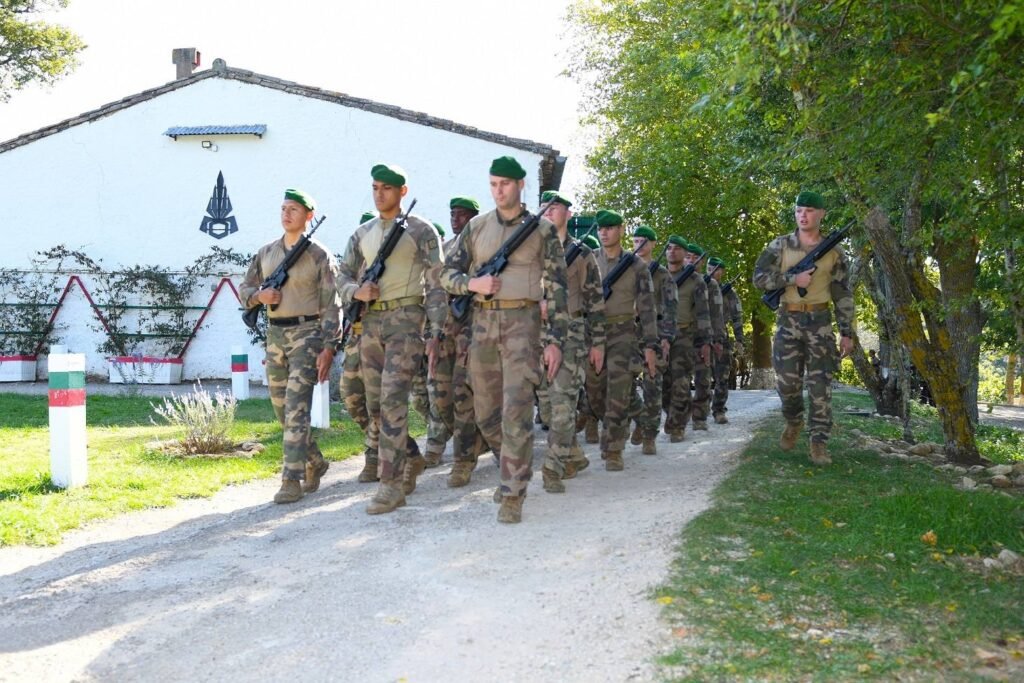
Once assigned to a regiment, a legionnaire can develop a military trade. The Legion offers specialties in combat, signals, driving, maintenance, administration and other fields. Access depends on performance, qualifications and service needs; course lengths are not the same for every trade. The official career information gives examples.
The most common specialties include:
- Human Resources and Administration
- Hotel and Catering Services
- Maintenance and Logistics Support
- Operational Infrastructure
- Information and Communication Systems
- Combat Support Operations
Specialist training can continue throughout a career. Physical fitness, including swimming, also remains important beyond initial training.
Advancement and Leadership
Legionnaires selected to become corporals receive elementary leadership training (FGE), preparing them to supervise a small team. Promotion depends on suitability and results, not just time served.
From there, a corporal can build technical experience, progress to corporal-chief or compete for NCO selection.
1. Continue as an Enlisted Soldier
A legionnaire may continue developing specialist qualifications and experience as a corporal, with the possibility of later promotion to corporal-chief. The timing depends on the individual’s record and available opportunities.
2. Become a Non-Commissioned Officer (NCO)
A corporal can also work towards promotion to sergeant. According to the Legion’s official career information, sergeant is accessible from three years of service, provided the soldier is already a corporal. This is an eligibility threshold, not an automatic promotion: selection, performance and leadership potential still matter. NCOs then receive further military and specialist training.
Where the career can lead
Not every legionnaire follows the same career path. Some become specialists, others move into leadership, and some leave after their first contract. If you are considering joining, read the joining guide; for civilian options after service, see life after the French Foreign Legion.
In communications, the perfection of a single detail can decide the outcome of a battle.

Legion Training
Prepare for selection.
Get ready for the French Foreign Legion with practical training tools.




Leave a Reply