
PART I — Introduction: The 2e REP Today
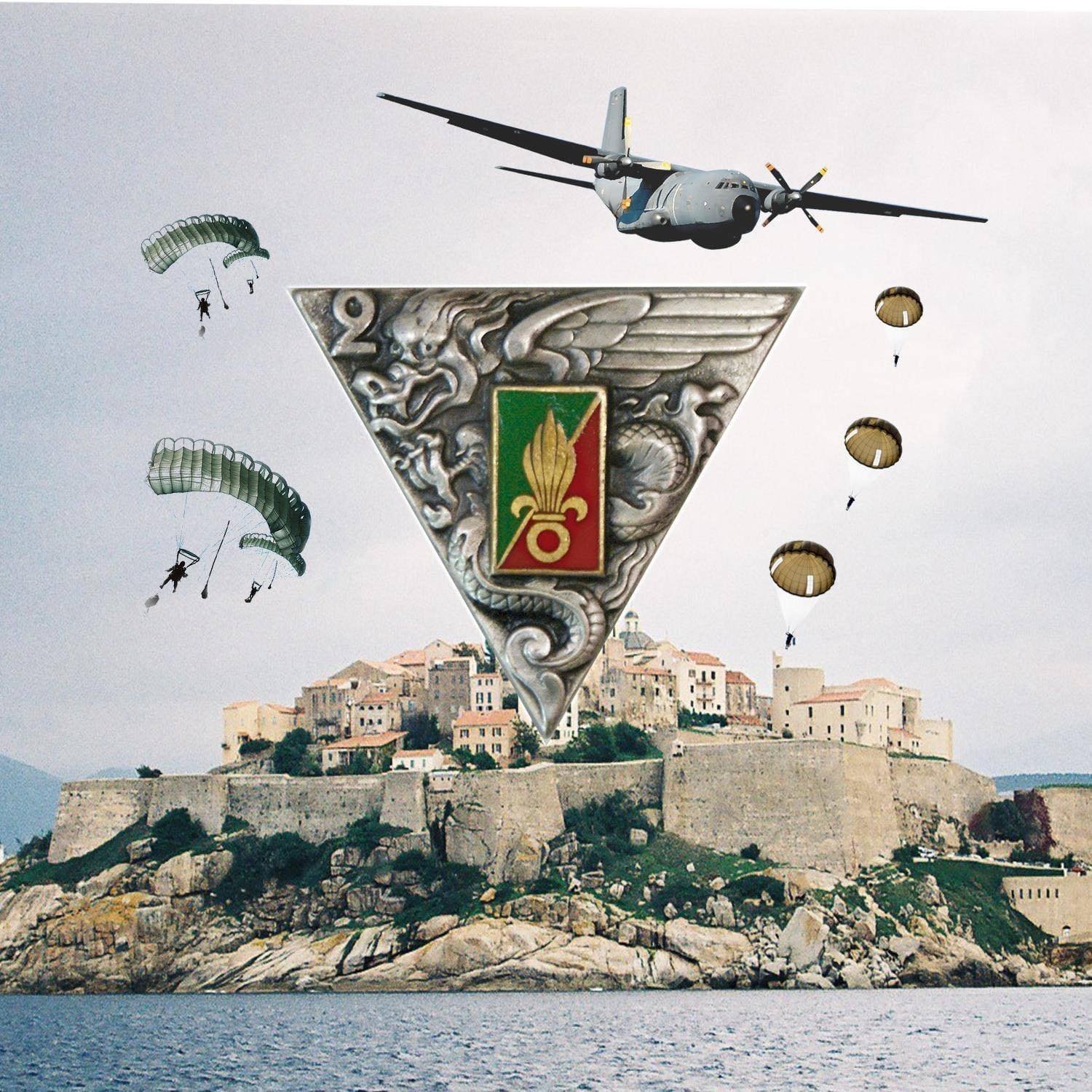
The last parachute regiment within the French Foreign Legion and the only regiment composed entirely of foreign volunteers within the 11th Parachute Brigade, the 2e Foreign Parachute Regiment (2e REP) is a unique unit that draws its strength from this dual heritage.
The history of the 2e REP can only be understood through the sacrifices and combat operations that shaped its identity. Since its creation in 1948, the regiment has pursued a single objective: operational excellence, wherever it is deployed.
Calvi: Training Ground and Spirit of the 2e REP
Stationed in Calvi since 1967, following the end of the Algerian War, the regiment has turned its isolated location into an advantage. This garrison, set in a strikingly beautiful yet harsh environment, offers steep terrain and a rugged landscape that provide demanding conditions for continuous, realistic and varied training.
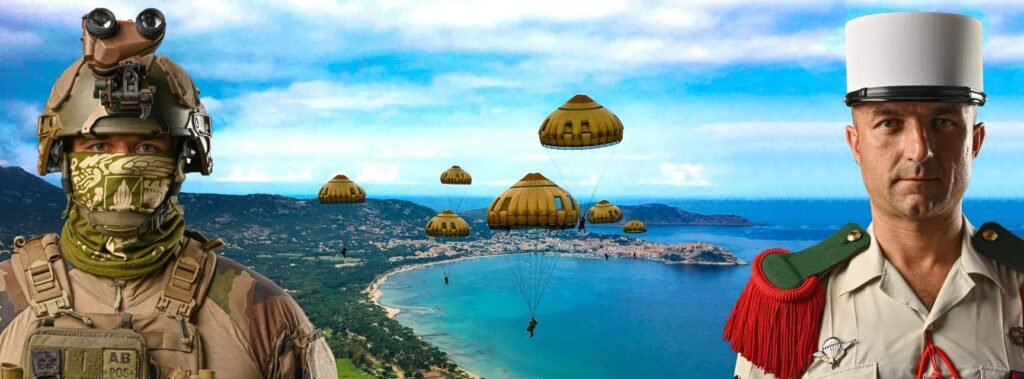
Beyond this physically demanding training, the regiment’s true strength lies in its esprit de corps, an unbreakable bond forged through hardship and discipline. Courage, loyalty, brotherhood: more than abstract values passed on to young Legionnaires volunteering to serve at Camp Raffalli, the 2e REP is a school of excellence where each individual is trained to go beyond his limits.
Get ready for the
French Foreign Legion
IQ tests,
Training
plans,
french
Vocabulary
and more.
Download Legion Training for free!


This article explores the many facets of the regiment. It covers its history, marked by legendary battles in Indochina, Algeria, Chad and more recently the Sahel, as well as the sacrifices of its men, often committed under extreme conditions. It also examines how the regiment trains and adapts today to maintain its operational edge, avoid surprise, and prepare for increasingly demanding engagements. Finally, it presents the regiment’s organization and specialties, which are key sources of cohesion, dynamism and operational effectiveness.
“Train and be ready” — this is the rhythm of daily life for Legion parachutists.
Defined by flexibility and reactivity, and grounded in a strong esprit de corps, the regiment evolves with its time. Serving in the 2e REP means preserving a legacy with rigor, high standards and humility, in order to be ready to surpass oneself in combat and accomplish the impossible, in the spirit of the Ancients.
Origins of the Legion Parachutists
The Birth of the Legion Parachute Units (1948)
In February 1948, in the midst of the Indochina War, one hundred and fifty seasoned volunteers from the 2nd and 3rd Foreign Infantry Regiments (REI) and the 13th Demi-Brigade of the Foreign Legion (DBLE) formed the parachute company of the 3rd REI.
Trained in courage and discipline, they carried out their first operational jump over Van Xa, in the Red River Delta. Early successes quickly followed, marking the birth of a tradition based on audacity and discipline. Although the unit was disbanded in 1949, its spirit lived on through the future Foreign Parachute Battalions (BEP).
From Indochina to the BEP Legacy
From 1948 onward, the Legion created its parachute battalions: the 1st, 2nd and 3rd BEP. Relentlessly engaged in Tonkin, Cochinchina and Laos, these units took part in all major battles of the Indochina War, including That Khé, Na San and Dien Bien Phu.
At Coc Xa in 1950, the 1st BEP was nearly destroyed, and its commander, Major Segrétain, was killed in action. From these ruins emerged a legend, that of soldiers who upheld their oath to the very last man.
From the BEP to the 2REP
Indochina and the Making of a Legend
Following the fall of Dien Bien Phu, the BEP were reconstituted and later transformed into Foreign Parachute Regiments (REP). On 1 September 1955, the 1st, 2nd and 3rd BEP became the 1st, 2nd and 3rd REP.
Algeria and the Parachute Heritage
Algeria, engulfed in insurgency, became their new theater of operations. The 3rd REP was quickly disbanded, reinforcing the two remaining regiments.
From 1955 to 1962, the 1st and 2nd REP distinguished themselves in the pursuit of FLN katibas. The 1st REP fought in Algiers, dismantling FLN terrorist networks, while the 2nd REP operated in the Constantinois region and along the Morice Line, confronting infiltrations by the National Liberation Army.
Under the command of Lieutenant Colonel Jeanpierre, the 1st REP became a symbol of Legion courage until its commander was killed in a helicopter shoot-down in 1958. The 2nd REP, meanwhile, conducted the “Precious Stones” operations — true mountain campaigns that highlighted endurance, ingenuity and solidarity.
After the dissolution of the 1st REP following the Generals’ Putsch in 1961, the 2nd REP remained the sole heir to the Legion’s parachute tradition.
From Bou-Sfer to Calvi
Based in Bou-Sfer, the 2e REP became a forward-looking regiment under Lieutenant Colonel Caillaud. Each company was assigned a specialization: night combat, mountain warfare, amphibious operations or sabotage.
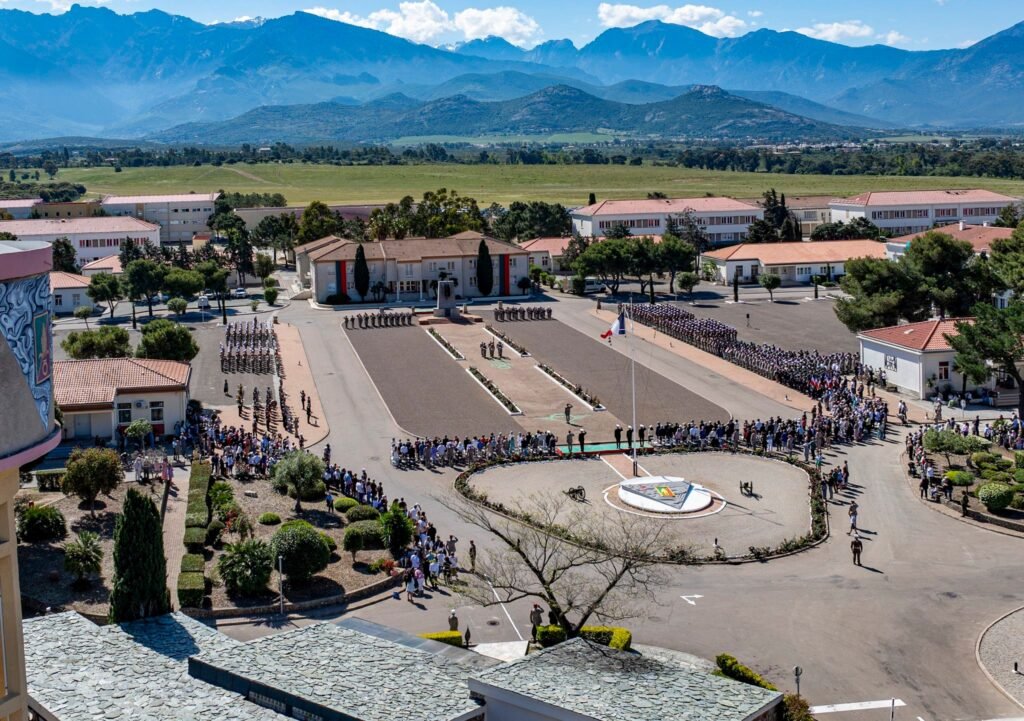
In 1967, the regiment settled permanently in Calvi. On the parade ground, the Sétif war memorial watches over the 2,429 Legion parachutists killed in Indochina and Algeria. The motto More Majorum — “In the manner of our Ancients” — became a living legacy.
Major Combat Engagements
Africa: Chad, Djibouti and Kolwezi
From 1969 onward, the 2e REP deployed to Chad, operating in the Tibesti and Ennedi regions. In 1976, in Djibouti, Legionnaires freed hostages in Loyada.
Two years later, Operation Bonite in Kolwezi brought the regiment to international prominence. On 19 May 1978, companies jumped onto the mining city of Zaire and rescued hundreds of hostages. Victory, achieved at the cost of blood, established the 2e REP as the spearhead of French interventions.
Gulf War and Post–Cold War Operations
In 1991, commandos from the 2e REP took part in the Gulf War during Operation Daguet. The following decades saw the regiment multiply external operations: Almandin in Bangui, Pélican in Brazzaville, and Licorne in Côte d’Ivoire. In each case, Legionnaires demonstrated the mastery and courage for which they are renowned.
Afghanistan, Mali and the Sahel
From 2010 to 2012, companies of the 2e REP deployed to Afghanistan in the Surobi and Tagab valleys. One hundred and six combat actions were conducted, with heavy losses, but the mission was accomplished.
In 2013, the regiment deployed to Mali. Parachutists conducted night jumps over Timbuktu during Operation Serval, then fought jihadist forces in the Adrar des Ifoghas. Sergeant-Chief Vormezeele was killed there, leading his section as an exemplary leader.
From 2015 to 2022, the regiment carried out repeated deployments across the Sahel, from Mali to Niger. From night jumps in the Chadian desert to engagements around Ménaka, Legionnaires demonstrated their unique expertise: surprise, mobility and audacity.
A Living Legionnaire Heritage
From Tonkin to the sands of the Sahel, from Kolwezi to Timbuktu, the 2e REP embodies the continuity of a single ideal: to serve with loyalty.
Heir to the BEP of Indochina and the only parachute regiment of the French Foreign Legion, it remains more than ever a symbol of excellence, forged in the fire of history and tempered by the spirit of its Ancients.
These engagements have earned the regiment’s colors six palms on the Cross of Military Valor and the right to wear the fourragère in the colors of the Legion of Honour.
Get ready for the
French Foreign Legion
IQ tests,
Training
plans,
french
Vocabulary
and more.
Download Legion Training for free!
PART II — Becoming a Legion Parachutist
Joining the 2e REP
After completing initial training at the 4th Foreign Regiment (4e RE) and assignment at the 1st Foreign Regiment (1er RE), Legionnaires selected for airborne service move to Calvi, home of the 2e REP. This transfer marks a decisive step: the transition from basic Legion Training to life within a parachute regiment.
From the first days, the regiment introduces new arrivals to Camp Raffalli, the different company specialties, and the regiment’s facilities. At this stage, Legionnaires begin to understand the operational environment they are about to enter and the standards expected of them.
The “Promo”: Integration into the Regiment
Arrival in Calvi
Arrival in Calvi marks the true beginning of parachutist training. The regiment presents its structure, its companies, and its way of life. From this moment on, Legionnaires integrate into the rhythm of the 2e REP and prepare to earn their place within the regiment.
Parachute Training and Qualification
Training starts with ground instruction. First, Legionnaires learn essential airborne drills and safety procedures. At the same time, they undergo physical preparation for the TAP (airborne troops) fitness tests, which demand endurance, strength, and resilience.
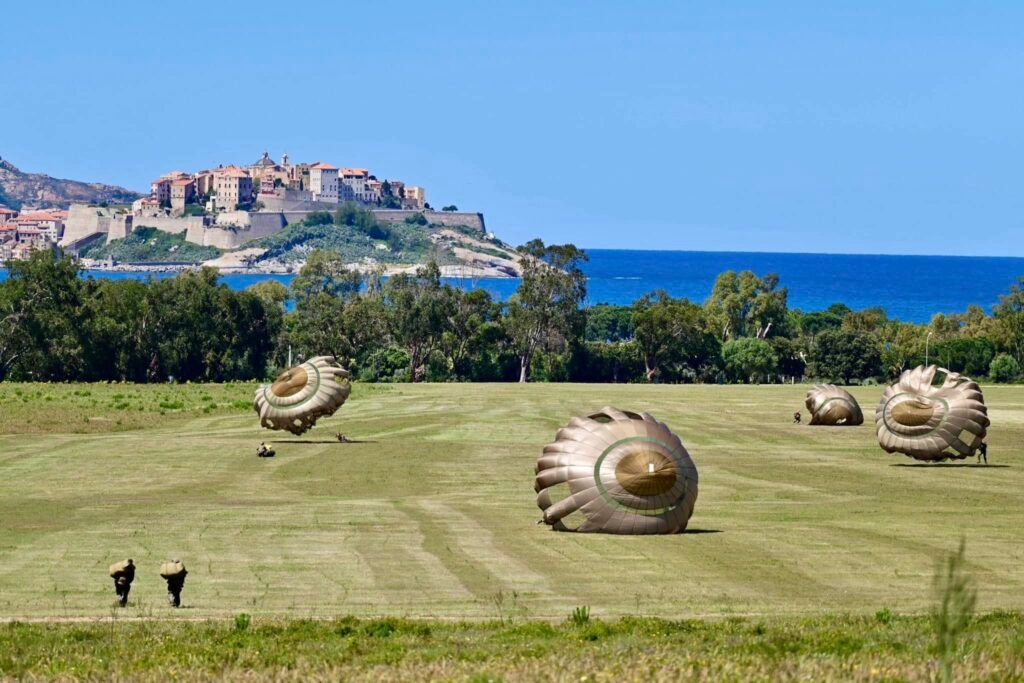
Next comes airborne training itself. Legionnaires conduct automatic opening jumps from aircraft departing Calvi Sainte-Catherine airport. Each movement follows strict procedures and repetition builds confidence and discipline. In total, Legionnaires must complete six jumps to qualify for the parachutist brevet.
Earning the Parachutist Brevet
Finally, the brevet ceremony takes place in front of the regiment’s war memorial. This moment carries strong symbolic meaning. Receiving the parachutist wings and the fourragère marks full entry into the brotherhood of Legion parachutists.
From that point forward, each Legionnaire becomes part of a lineage forged by combat, sacrifice, and shared commitment.
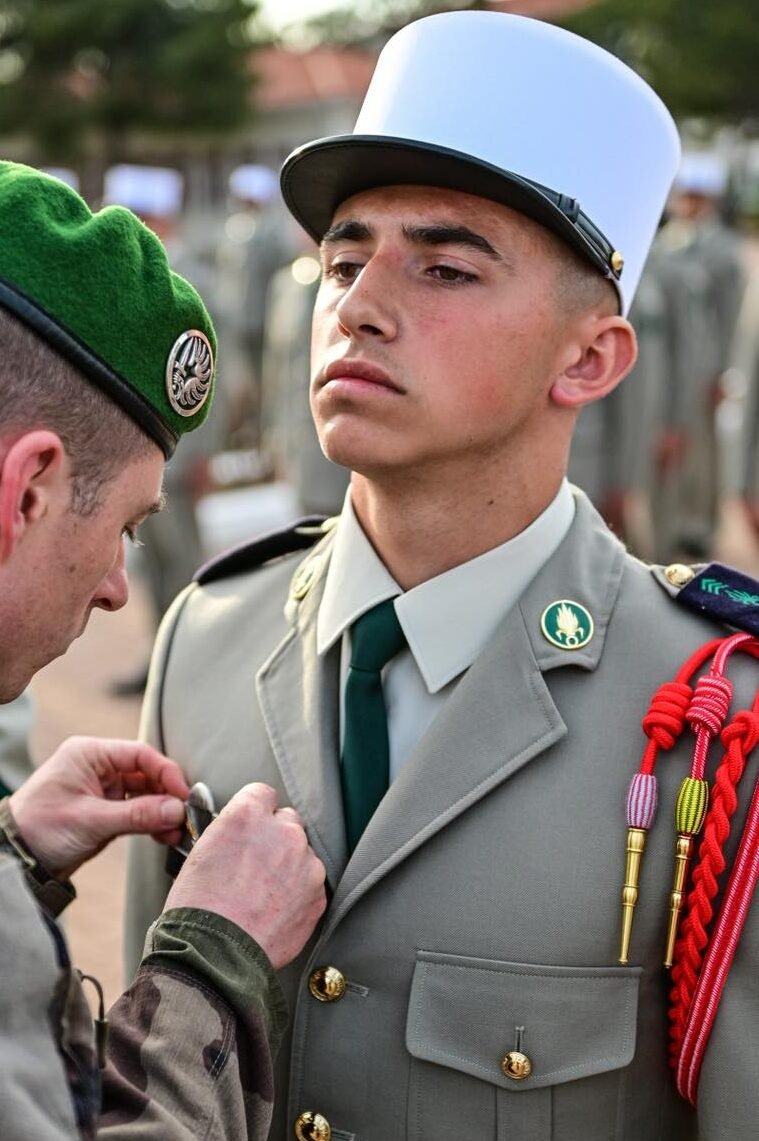
The 2e REP as an Airborne Infantry Regiment
Compared to heavier infantry formations, airborne infantry relies on a deliberately reduced logistical footprint. After an operational jump, the regiment’s combat train may not reach the units on the ground for several days. As a result, Legionnaires must carry everything required to live and fight for extended periods. This autonomy increases physical strain during movement and approach phases, but it also grants freedom of action.
Today, the 2e REP focuses its training on high-intensity warfare. The regiment continues to evolve in all domains. In particular, it strengthens its fire support with the re-creation of a 120-mm mortar section and the development of FPV drone capabilities.
By closely monitoring changes in combat techniques across modern theaters of operation, Legion parachutists remain faithful to the spirit of Colonel Caillaud: to be ready for engagement at any time and in any place.
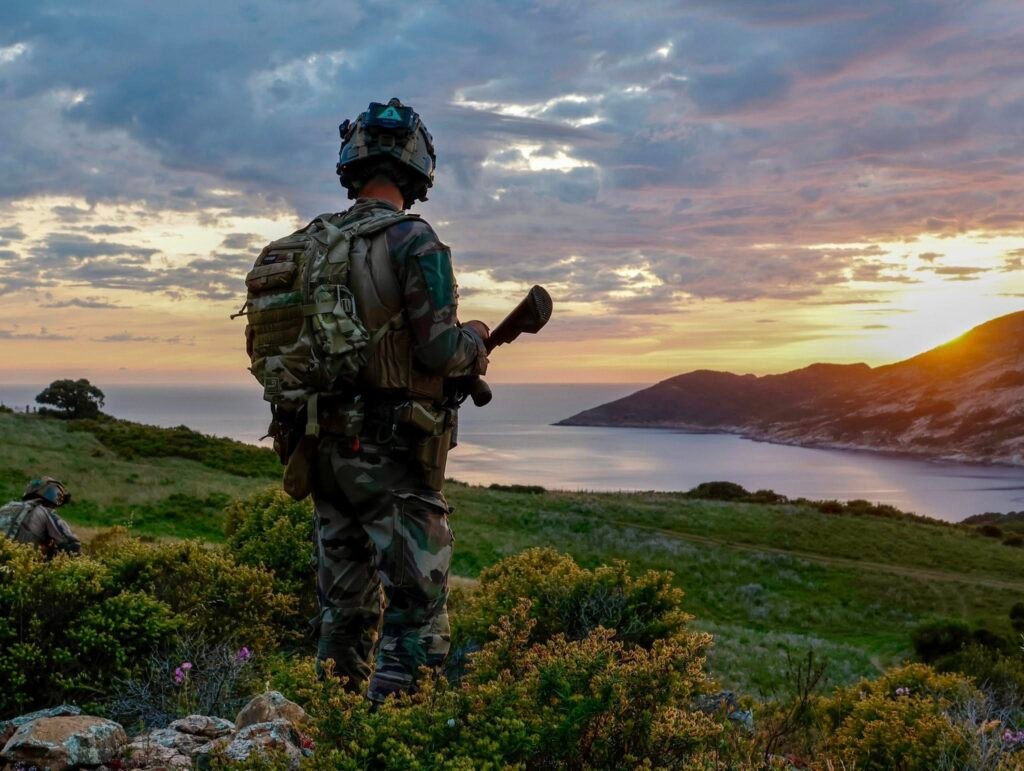
PART III — The Regiment in Action
Combat Companies and Their Specialties
1st Company: Urban Warfare
Initially specialized in anti-tank combat and later in night operations, the 1st Company shifted its focus toward urban warfare in the late 1980s. Its primary mission is to seize entry points in built-up areas, regardless of the method used to approach them, and then either open access for other units or fight directly within the urban environment.
Training within the company follows a progressive three-level structure.
At Level 1, grenadiers and riflemen learn the fundamental skills of urban combat. This includes methods of movement in built-up areas, the use of mechanical breaching tools, and procedures for clearing buildings and rooms.
The anti-tank track targets rocket and missile gunners. In addition to urban movement techniques, they train in the employment of anti-armor weapons, one of the main threats encountered in urban combat environments.
At Level 2, aimed at corporals, training focuses on commanding a two-man team in urban terrain.
At Level 3, group leaders acquire advanced expertise in close-quarters combat while learning to command a combat group in an urban fight. External courses, such as those provided by the AZUR cell or the CENZUB, complement this training.
Some leaders also receive specialized instruction in the use of explosives, specifically for dynamic breaching operations.
Training takes place mainly in Corsica, where the regiment has several dedicated sites that allow instruction from individual level up to company-level combat in urban terrain. These include the La Chouette combat village, located near the drop zone, and the more developed training area at Camp de Frasselli in southern Corsica.
In addition to night-vision equipment, target designation tools, breaching gear, and crossing equipment, the company continuously updates its equipment and adopts new technologies to better adapt to urban combat. Indoor drone flight represents one of the most recent developments.
2nd Company: Mountain Warfare
The 2nd Company has specialized in mountain warfare since 1963, strengthening the regiment’s ability to operate in rugged terrain. This demanding specialty requires rigor and commitment, giving the company a strong identity and a high level of discipline.
In Corsica, the company benefits year-round from ideal training terrain, where sharp rock formations harden both body and mind. A dedicated mountain chalet allows the entire company to operate closer to high-altitude terrain during specialty training phases. In addition, to diversify and expand its experience, the company regularly conducts training periods in the Alps and the Pyrenees.
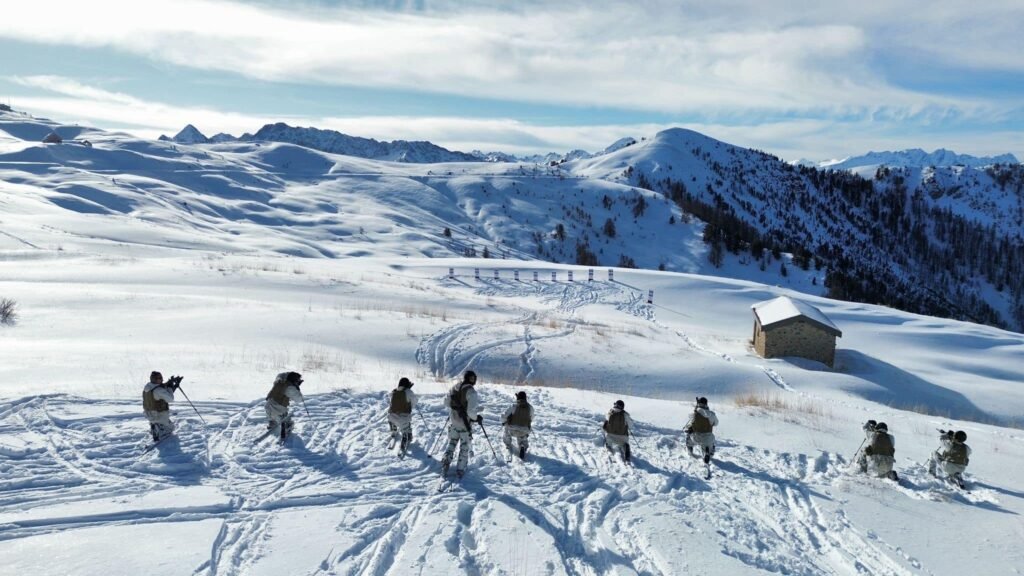
Mountain and cold-weather warfare represent one of the most demanding operational environments. As a result, training is long and rigorous. Each year, the company conducts two initial courses for young Legionnaires: one in summer and one in winter. The most capable soldiers are later selected to command units in this harsh environment, with the ultimate goal of surprising the enemy where he least expects it.
In this context, the 2nd Company was recently deployed to Estonia during Operation Lynx, where it applied its expertise in cold-weather and difficult terrain operations.
The dedication of its leaders and Legionnaires, combined with technical skill, endurance, and advanced mobility capabilities, makes the 2nd Company a reliable asset for operations in mountainous environments.
3rd Company: Amphibious Operations
In 1963, the 3rd Company received responsibility for the amphibious specialization, with the mission of seizing coastal areas following maritime infiltration. Today, the Bay of Calvi and access to the entire Corsican coastline provide extensive training opportunities.
As an airborne infantry unit capable of jumping into the sea, infiltrating by swimming, and securing coastal objectives, the company conducts three levels of specialty training.
The first level validates mastery of basic amphibious skills and maritime infiltration techniques.
The second level focuses on navigation fundamentals and maritime tactics.
The third level, more demanding, targets leaders and confirms full autonomy in the amphibious environment.
Within the company operates the Army Diver Group (GPAT). Selected from within the regiment, these specialists receive training in Saint-Mandrier and at the Engineering School in Angers. They support operations through underwater infiltration, providing early reconnaissance and intelligence to support maneuver.
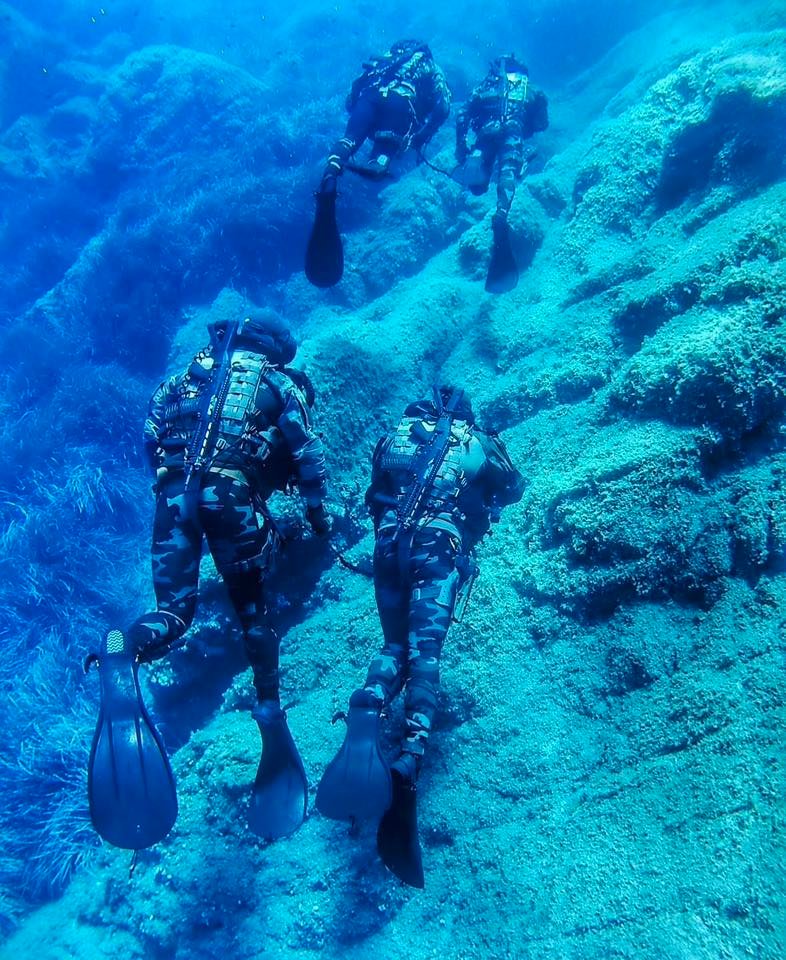
4th Company: Destruction and Snipers
The 4th Company specializes in sabotage operations and combat on the enemy’s rear areas. It trains its leaders and Legionnaires in the use of explosives and precision shooting. Internal training courses develop the skills required for tactical destruction, discreet infiltration, and coordinated team employment.
Snipers are selected from the company’s best marksmen. Their training emphasizes autonomy, mastery of terrain analysis, communications, and tactical awareness. As a result, they can provide valuable intelligence ahead of main forces and support unit commanders during operations.
Support and Specialist Units
The Support Company concentrates the regiment’s capabilities in intelligence, fire support, and commando-style operations. It includes the Regimental Reconnaissance Section, the Drone and Designated Marksman Section, the Direct Support Section, the 120-mm Mortar Support Section, and the Parachute Commando Group.
The 120-mm Mortar Section provides powerful indirect fire support across the regiment’s area of operations.
The Parachute Commando Group (GCP) forms the regiment’s elite element, capable of long-range infiltration and deep operations behind enemy lines.
Command, Logistics and Sustainment
Command and Logistics Company
Reorganized in 2025, the Command and Logistics Company ensures operational support for the regiment. It guarantees logistical autonomy and enables command and control of the combined arms tactical group during operations.
Base and Support Company
The Base and Support Company forms the backbone of daily life support within the regiment. It manages accommodation, food services, clothing, and transportation, while ensuring continuity of support during overseas deployments.
Regimental Maintenance Company
The Regimental Maintenance Company ensures the technical availability of all equipment, both in mainland France and in operational theaters. Through this mission, it directly guarantees the freedom of action of the 2e REP.
The Future of the 2e REP
Equipped with a dedicated innovation cell, the regiment continues to develop its drone capabilities, train new operators, and integrate FPV teams. As these capabilities expand, doctrinal reflection accompanies technical progress in order to improve command-post survivability and operational effectiveness against contemporary threats.
Get ready for the
French Foreign Legion
IQ tests,
Training
plans,
french
Vocabulary
and more.
Download Legion Training for free!
Visit the French Foreign Legion’s Official Page or 2REP’s official Facebook Page
- French Foreign Legion recruitment in 2026
- 2e Foreign Parachute Regiment (2REP)
- For Americans Considering the French Foreign Legion
- Pay in the French Foreign Legion in 2026 — Salary, Bonuses, and Real Examples
- The 2nd Foreign Infantry Regiment: Modern, Tough, and Ready for Tomorrow




An amazing article as per usual. leaving for France May 2026. 2e Rep is the goal but I will be grateful if the legion takes me at all. Getting my fitness dialled in and starting my second 3 month french course end of this week. It is an emotional time, alot of “lasts”, last christmas, last time seeing some family but I am looking forward to the first day of my new life. Bonne chance to those wanting to join the brotherhood and many thanks to those have joined and have lit the path ahead for us to follow.
regards
Good Work was part of this in the late 80s to midt 90s